





Eye For Film >> Movies >> La Belle Année (2026) Film Review


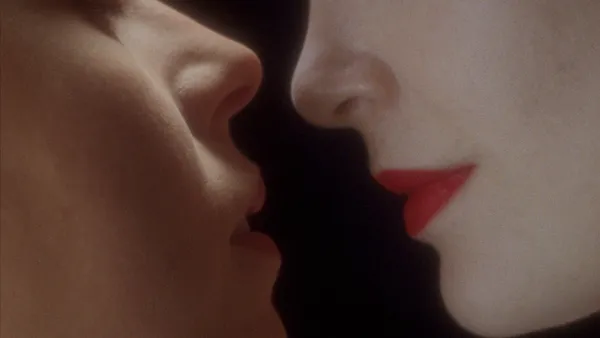

Angelica Ruffier’s La Belle Année is a hybrid documentary essay shaped by the aftermath of a death and the slow, practical labour of sorting through what remains. Set largely inside a lived-in house in the South of France, it treats mourning less as a single emotional event than as a process of handling objects, paperwork, and personal records. Diaries, letters, and home video become the real protagonists, not because they “reveal” a tidy narrative, but because they show how memory survives when it is committed to physical media.
Ruffier has an instinct for atmosphere. The documentary is undeniably visually appealing, attentive to texture, light, and the expressive clutter of a family interior. It also sketches the outline of a particular cultural upbringing, where literature and cinema are part of the furniture. That sensibility gives La Belle Année a distinctive voice. It is not only recounting a past, it is showing how an aesthetic education can become a shelter, a way of giving shape to feelings that are otherwise too diffuse to name.

The darker current running underneath is handled with restraint. Rather than staging trauma as a set of dramatic peaks, Ruffier suggests the long weather of it: an unstable household, a parent’s struggle, the kind of childhood tension that can remain “invisible” to outsiders while still marking the people who lived inside it. Out of that atmosphere emerges a tender, diaristic countercurrent – a teenage crush on her history teacher, a woman – less scandal than sanctuary, a private aesthetic of admiration that reads like a coping structure. In that sense, the film brushes against the emotional territory of Dreams (Sex Love), where youthful longing becomes a form of self-writing, a way of making a livable narrative when ordinary life is not. The intimacy will resonate with viewers who recognize that experience, and it may also sting for those who never had the proof, the archive, the record that can validate what they remember.
At the same time, La Belle Année occasionally fights itself. Ruffier’s cine-literary fluency is real, but it can tip into a self-conscious layering of references and inserts that feel more decorative than necessary, as if the work is reaching outward to other images when its own materials already carry enough force. More crucially, when a director spends so much time inside her own frame, the composition can begin to feel like a foregone conclusion. You become aware of the author arranging meaning as it happens, and the piece drifts from discovery into demonstration. The result is less an openness to what the archive might complicate, and more a sense that it is steering toward insights it already decided on.
That tension doesn’t undo what’s impressive here: formal confidence, clarity of personal stake, tactile respect for physical record. If it sometimes over-curates its own vulnerability, it remains an accomplished debut precisely because it understands that memory is not abstract. It lives in objects, handwriting, old tapes, and the narratives we build to survive them.
Reviewed on: 03 Feb 2026


